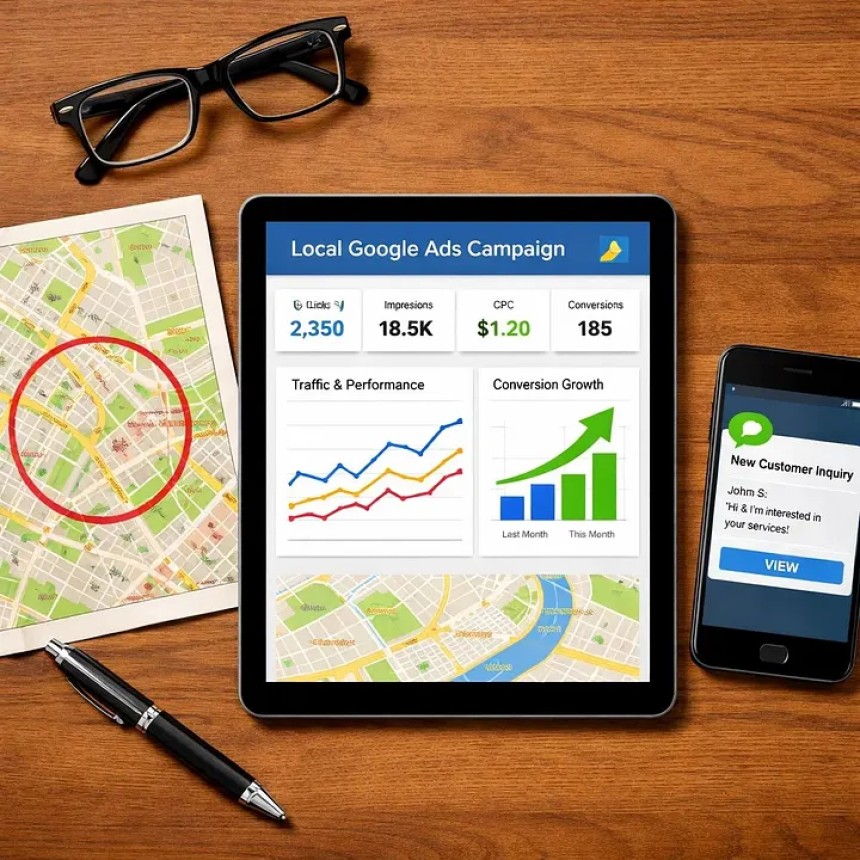

Local PPC Campaigns: A Step-by-Step Guide
Learn how to set up Local PPC campaigns that convert. A step-by-step guide to Paid Search and Google Ads for small business owners and beginners.
For small business owners, the digital marketplace can often feel like a vast ocean where it’s easy to get lost. However, if you want to be the lighthouse that guides local customers to your shore, Local PPC is your most powerful tool. Unlike traditional advertising, which casts a wide net, local Paid Search allows you to laser-focus on the people in your neighborhood who are ready to buy right now. Whether you’re a local bakery or a specialized law firm, mastering Google Ads for a local audience is the fastest way to see a tangible return on your marketing spend. Here is your step-by-step roadmap to success.
Step 1: Define Your Local Territory
The “Local” in Local PPC is its defining characteristic. Before you spend a single dollar, you must decide exactly where your ads will appear. Google allows you to target by zip code, city, or even a specific radius around your physical location.
If you’re new to the digital landscape, you might have common digital marketing questions about how tight your radius should be. A good rule of thumb is to start small — cover the area you can reasonably service — and expand only once you’ve dominated that space.
Step 2: High-Intent Keyword Selection
In Paid Search, keywords are the bridge between a customer’s problem and your solution. Local users tend to search with high intent, often using phrases like “emergency plumber near me” or “best pizza in [City Name].”
To keep your costs down while you’re learning the ropes, look for free marketing tools for beginners that can help you identify these local search patterns. By bidding on specific, location-based keywords, you avoid wasting your budget on broad terms that don’t lead to local conversions.
Step 3: Crafting Ad Copy That Converts
Your ad is your digital storefront. It needs to be inviting, clear, and relevant. When using Google Ads, take advantage of every “extension” available to you.
- Location Extensions: Show your address and distance from the user.
- Call Extensions: Allow mobile users to call you with one tap.
- Sitelink Extensions: Direct users to specific pages, like “Book an Appointment.”
Remember, while PPC provides instant traffic, it works best when paired with a long-term SEO guide for ranking on Google. This “dual-threat” strategy ensures you own the top of the search page through both paid and organic results.
Step 4: Optimizing for the Future of Search
As technology evolves, so does the way people find local businesses. We are seeing a massive shift toward “natural language” queries. Understanding voice search vs. text search trends is no longer optional; it’s a requirement.
A user asking Siri for “the nearest hardware store” uses a different language than someone typing into a laptop. Your Local PPC campaigns should account for these conversational phrases to ensure you’re capturing leads across all devices.
Frequently Asked Questions (FAQs)
Q: Is Local PPC better than Local SEO?
A: They serve different purposes. PPC provides immediate visibility and leads, while SEO builds long-term authority and “free” traffic. Most successful businesses use both simultaneously.
Q: How much should I spend on my first Local PPC campaign?
A: Start with a budget you are comfortable with — even $10 to $20 a day can yield results for a local business. The key is to monitor your “Cost Per Lead” and scale only when you see a positive return.
Q: How do I know if my ads are actually working?
A: Use Google Ads conversion tracking. This tells you exactly how many people clicked your ad and then took an action, like calling your shop or filling out a contact form.
Q: Can I run local ads on social media too?
A: Absolutely. While this guide focuses on Google, platforms like Facebook and Instagram also offer powerful local targeting features to complement your search efforts.
Take the First Step Today
The gap between where your business is and where it could be is often just a well-optimized campaign away. By focusing on your local community, you aren’t just buying ads — you’re building local relationships.
Start your local PPC campaign now!
Need help in growing your business? If you care for your business and want to see it at the top like them, you can contact Grow Media Digital. Grow Media Digital is a one-stop solution for every digital need. For More Details, Visit Our Official Website: https://www.growmedia.digital/



Top 6 Beaches In Goa That You Cannot Afford To Miss In Your Goa Holida...