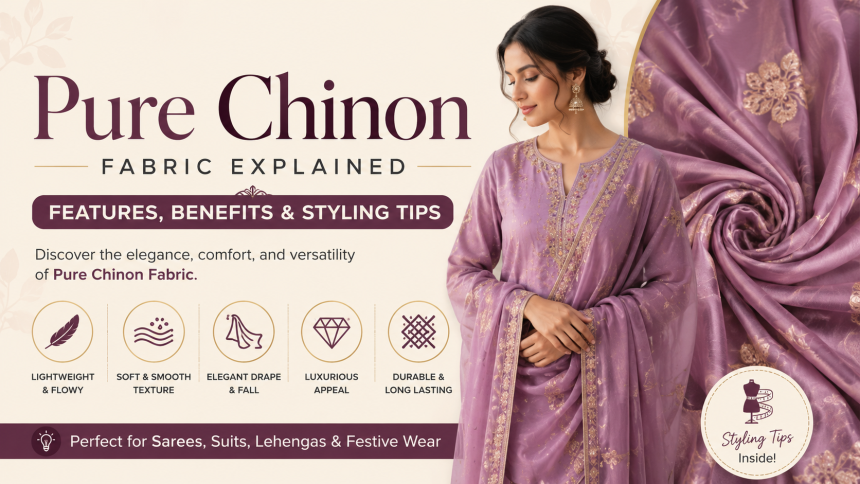
Pure Chinon Fabric Explained: Features, Benefits & Styling Tips
Explore Pure Chinon fabric in detail, including its features, benefits, texture, and expert styling tips. Discover why Pure Chinon is a preferred choice for elegant sarees, suits, lehengas, and festive outfits thanks to its soft feel, graceful drape, lightweight comfort, and luxurious appeal
Pure Chinon fabric, sometimes called Chinon, is an opulent, lightweight, semi-sheer fabric that is well-known for its remarkable drape, delicate shine, and flowing texture. As a result, it is frequently chosen for ethnic and celebratory attire. Modern Chinon, which has its roots in silk weaving customs, frequently uses premium viscose or synthetic filaments to provide a more cost-effective, long-lasting, and adaptable substitute for pure silk while retaining a high-end appearance.
Key Features of Pure Chinon Fabric
Chinon fabric is special because it can be utilised for both dress and formal styles, drapes well, and has a smooth hand and little gloss. Beyond its appearance, however, it has certain useful advantages, like the capacity to be layered, printed on, and, depending on its composition, moderately durable.
Basic Features
- A flowing, airy drape.
- A mixed or filament yarn structure typically combines nylon, polyester, rayon, or silk fabric.
- It is utilised for elegant, flowing clothing and has a sheer-to-semi-opaque appearance.
- This is frequently used in dress fabrics, evening wear, dupattas, drapes, overlays, and high fashion.
Core Features
- Texture & Appearance: Often referred to as a more glossy version of chinon, it has a smooth surface with a faint sheen.
- It has a flowing, semi-sheer structure.
- Drape & Weight: It is perfect for sewing clothing with elegant movement because it is lightweight and drapes beautifully.
- Composition: Frequently composed of silk-polyester mixes or high-twist viscose filaments, which increase its flexibility and decrease shrinking in comparison to pure silk.
- Print Affinity: Vibrant floral designs and other digital prints look well on the smooth surface. Durability: Modern synthetic mixes provide superior durability and wrinkle resistance despite their delicate nature.
- Care considerations: Depending on the type of fibre, it may require careful handling (particularly pure silk varieties).
- Affordability tier variation: While synthetic or blend versions are less expensive than pure silk, they nonetheless have a comparable drape and appearance.
Benefits of Pure Chinon Fabric:
Brands, purchasing managers, and textile buyers can profit greatly from chinon fabric in a number of ways, including:
- Luxurious Look at Moderate Cost: It provides a costly, regal image that is appropriate for events and weddings without the exorbitant price of pure silk.
- Comfort & Breathability: Because it is light and airy, it is very comfortable and breathable, making it perfect for summer weddings, long-term events, and warm weather.
- Styling Versatility: It holds digital prints, zari work, and embroidery incredibly well.
- Wrinkle Resistance: Because of its synthetic blend composition, it resists severe creasing, making it a sensible option for long events or travel.
- Customisation options include colour runs, print readiness, and blend options (silk/synthetic).
- Production-friendly: Many contemporary Chinon variants (polyester blends) provide easier care and improved resistance to wrinkles.
- Adaptable to trends: Suitable for colour stories, bold themes, and digital printing.
- Benefits of brand and sourcing.
- By choosing blend variants, you can have a high-end appearance at a reasonable price.
- Lightweight hands allow for layered or flowing silhouettes.
- Digital or reactive methods are supported by the easy print/dye surface.
- Assists companies in creating seasonal collections with a sophisticated foundation fabric, such as partywear, ethnic, and vacation.
- The availability of synthetic variations makes it suitable for both small-batch and large-scale production.
- Synthetic/silk blend options offer more economic flexibility.
- High-end clothing can benefit from elegant drape and flow.
Styling & Usage Tips:
- Festive Wear: Choose Chinon kurtas, sharara sets, or lehengas with zari or sequin embellishments for sangeet or mehendi functions.
- Sarees: Its flowing, romantic autumn makes it a great option for flowing sarees, which are frequently combined with simple, contemporary styling.
- Fusion Wear: Use it to make modern outfits like evening gowns, maxis, and kaftans.
- Accessories: Its light weight makes it ideal for flowing scarves and dupattas.
- Layering: It is ideal for layering, either as an outer layer or for clothing with premium inside linings, because it is frequently semi-sheer.
Care & Maintenance Wash Care:
- Although certain variations can be hand-washed in cold water with a light detergent, dry cleaning is typically advised for embroidered or premium Pure Chinon to preserve its texture.
- Ironing: To avoid damaging the filaments, iron the back side on low heat.
- Storage: To preserve the sheen, store in a cool, dry location, preferably folded in a breathable cover.
- For silk or silk-blend chinon, hand wash in cold water with a light detergent or dry clean.
- For synthetic chinon, wash gently in a cold machine and hang or line dry.
- Steer clear of sharp edges and uneven surfaces to prevent snagging.
- To avoid fading or losing lustre, store folded in breathable covers and keep out of direct sunlight for extended periods of time.
- If the print was created with Chinon, test the colourfastness before to the entire wash run.
Key trend areas:
- Chinon digital printing produces bright, detailed prints on lightweight substrates.
- Blended chions with breathable synthetics: to combine cost-effectiveness, durability, and drape.
- Eco variations: Synthetic filament versions made of low-impact fibres or recycled polyester.
- Hybrid layering textiles: Chinon is combined with solid fabrics to create contrast or used as an overlay in dresses.
- Cross-cultural usage: Chinon is frequently used in bridal gowns, party clothing, and sarees in South Asia.
Concluding Remarks:
For designers, businesses, and textile procurement teams looking for lightweight elegance, fluidity, and versatility, chinon cloth is a smart option. Success is ensured by understanding the fibre possibilities, weight specifications, finish treatments, and sourcing parameters for evening gowns, festival sarees, printed dresses, and resortwear. Making ensuring that your garment brief, technical specifications (GSM, width, drape), supplier sampling, and quality control are all in sync will help you get the most out of Chinon fabric. This will enable you to create clothing that satisfies brand standards, looks fantastic, and moves effortlessly.
Visit For More Information: https://www.thesoka.com/collections/chinon-suit
Need help in growing your business? If you care for your business and want to see it at the top like them, you can contact Grow Media Digital. Grow Media Digital is a one-stop solution for every digital need. For More Details, Visit Our Official Website: https://www.growmedia.digital/


Silicone Extrusion Manufacturers Revolutionizing Manufacturing Sector