
Why I Delayed My Online M.Tech by a Year?
A first-person account of why delaying an Online M.Tech by a year led to better preparation and less stress covering what to check before enrolling, a comparison of starting immediately versus after a planned gap, and who this path through University Vidya genuinely suits.
Two years ago, I had my postgraduate engineering plan mapped out. I wanted to move from a routine technical role into something more specialised, and going back to study felt like the obvious next step. Then work got heavier, my personal savings weren't where I wanted them, and I kept asking myself if starting now, unprepared, would actually help or just add pressure I didn't need.
So I waited. Not because I lost interest, but because I wanted to start it right instead of starting it fast. Looking back, that one year changed how I approached the entire degree. If you're standing where I was, wondering whether to jump in immediately or hold off, this is the honest version of what I learned. An Online M.Tech is a serious commitment, and timing it well matters as much as choosing it in the first place.
Why Do Working Professionals Consider this Path?
Most people look at this degree when they've hit a ceiling in their current technical role. You know the basics well, but the next level of jobs asks for specialized knowledge you don't have yet. A structured postgraduate engineering program fills that gap in a way random online courses often can't, because it goes deeper and follows a proper sequence.
Key Things to Check Before Deciding:
- Is your current job stable enough to handle added study hours without burnout
- Do you have clarity on which specialisation actually matches your career goal
- Will your employer value this qualification for internal growth, or is it mainly for external job changes
- Are you mentally ready for structured deadlines again after a break from academics
- Do you have a support system at home that understands the time this will take
- Is your reason for starting now genuine interest, or just pressure from peers
What Made the Delay Worth It?
Waiting gave me time to actually research specialisations instead of picking one under pressure. I spoke to a few people already working in the field I wanted, checked what skills their job postings expected, and used that gap year to strengthen my basics through free resources. When I did start, I wasn't learning concepts and adjusting to structured study at the same time. That single change reduced a lot of stress I would have carried otherwise.
Starting Immediately vs Starting After Preparation
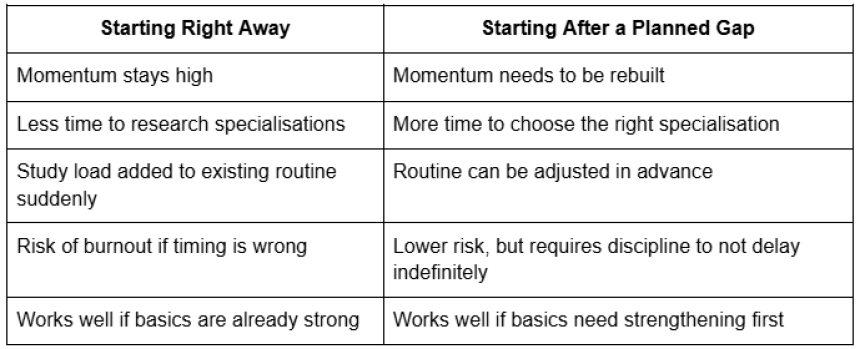
Neither approach is universally right. What matters is being honest about which one actually fits your current life, not which one sounds more ambitious.
Who Does This Suit Best?
This route suits working professionals who already have some engineering background and want to specialise further through University Vidya, rather than beginners exploring the field for the first time. It also suits people who can commit to consistent study alongside a job, since the pace assumes some prior technical comfort.
Career Direction After Completing It
Graduates typically move into specialised technical roles, research-oriented positions, or senior engineering responsibilities that need deeper subject expertise than a first degree usually covers. The value here comes from depth, not breadth.